Frontline Workforce Index 2026 – Building workforce resilience in UK retail and hospitality
5 minute read
Why frontline workforce resilience is becoming a commercial advantage in retail and hospitality
We surveyed 2,000 UK frontline employees to benchmark resilience, quantify labour mismatch and show where AI-enabled workforce planning can improve execution
The frontline labour challenge is no longer just a people issue. It now sits at the heart of operational performance. In retail and hospitality, resilience is shaped by rota quality, access to hours, day-to-day support and the ability to retain experienced workers. These factors determine how reliably businesses can convert labour into customer execution.
The Frontline Workforce Index 2026, produced by Retail Economics in partnership with Legion, puts a benchmark around that challenge. The research shows a workforce model with a credible base, but visible strain in areas that matter most to reliability, stability and retention. It also identifies where better workforce design and AI-enabled decision support can improve labour utilisation, reduce avoidable churn and strengthen service delivery.
What you can learn from this report
• How to benchmark the resilience of your frontline operating model across the areas that most affect daily execution.
• Which worker cohorts need different interventions, from flexibility and support to stability, hours and progression.
• Where hours mismatch, weak schedule quality and retention pressure are creating hidden operational cost.
• How AI can support better decisions around availability, rota timing, shift swaps and workforce reallocation.
• What a more resilient frontline model looks like in practice, and how to move from diagnosis to action.
Key report insights
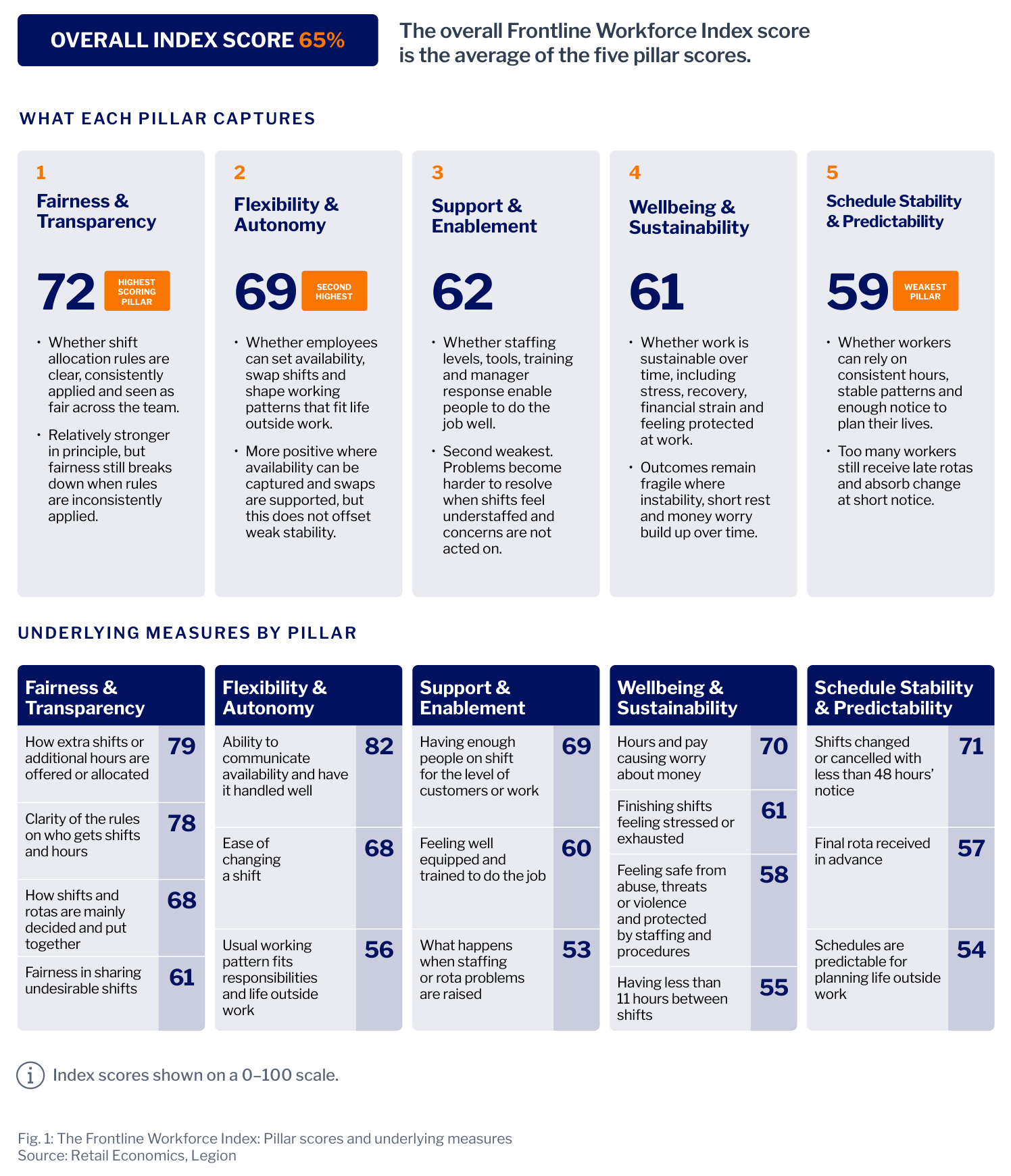
• The 2026 Frontline Workforce Index score is 65/100, indicating a credible baseline but clear operational strain.
• The strongest pillars are Fairness & Transparency (72) and Flexibility & Autonomy (69).
• The weakest areas are Schedule Stability & Predictability (59) and Support & Enablement (62).
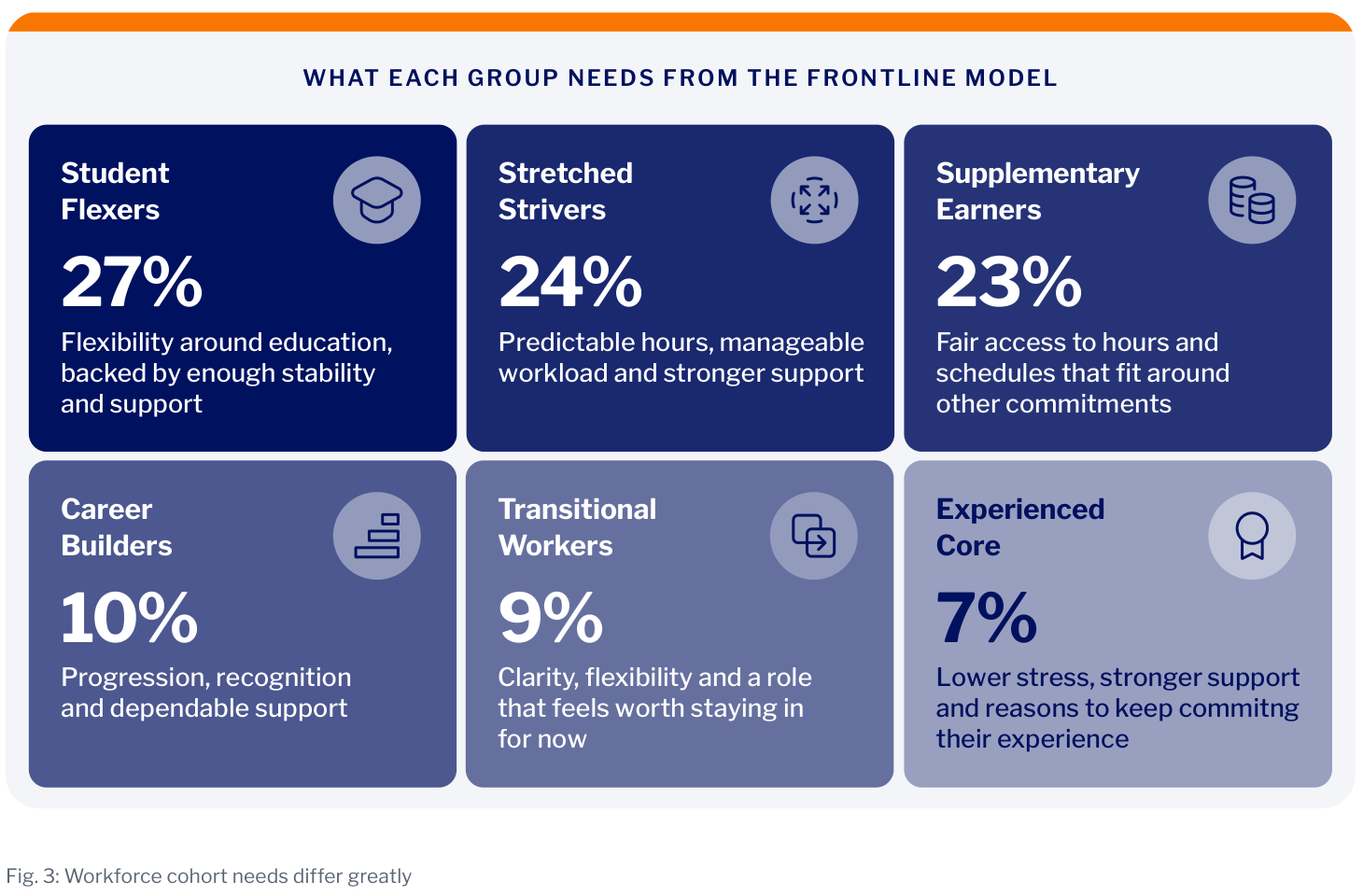
• The three largest personas account for 74% of the frontline workforce: Student Flexers (27%), Stretched Strivers (24%) and Supplementary Earners (23%).
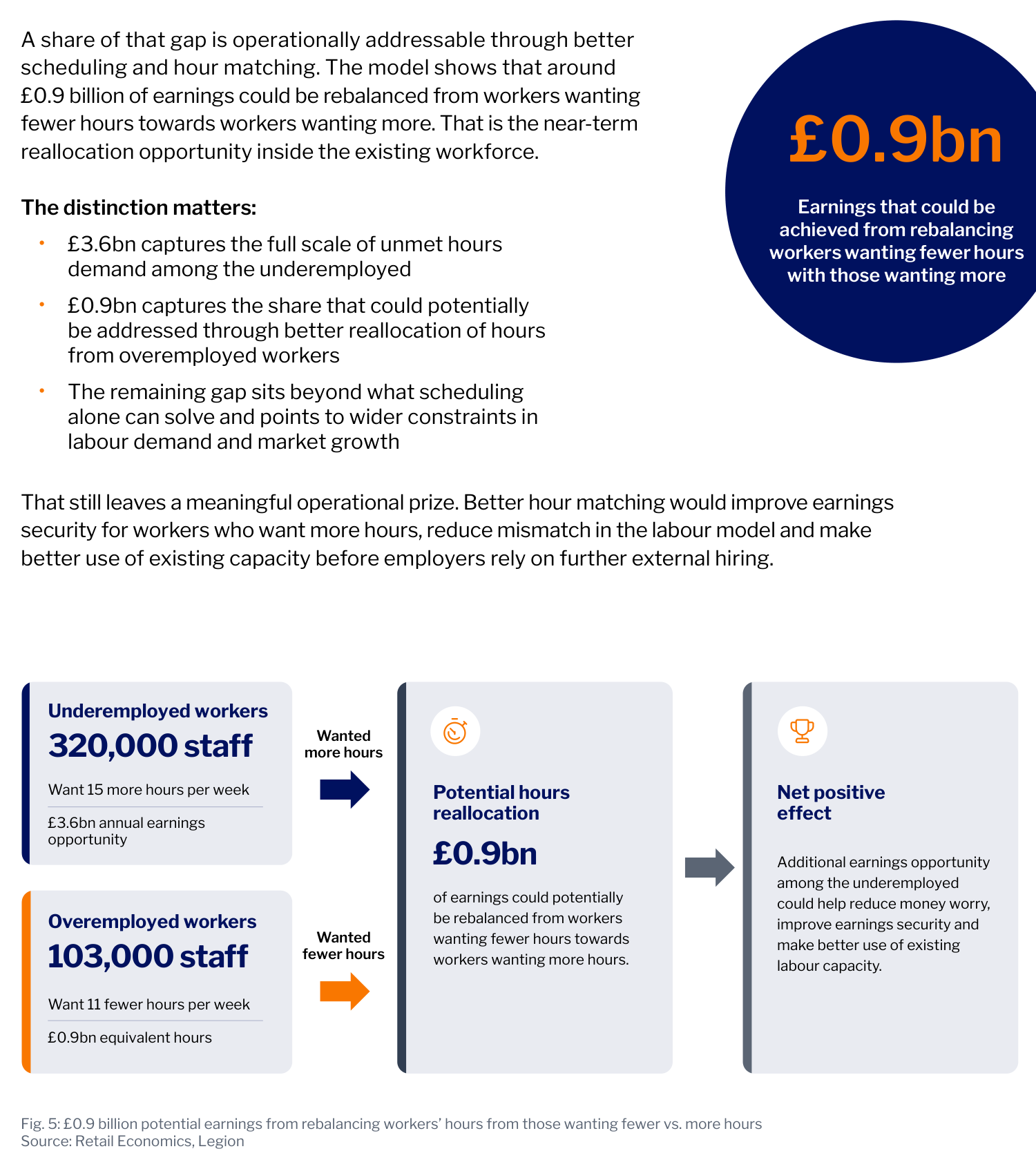
• Workers wanting more hours represent £3.6 billion in unrealised annual earnings potential, with £0.9 billion potentially rebalanced within the existing workforce.
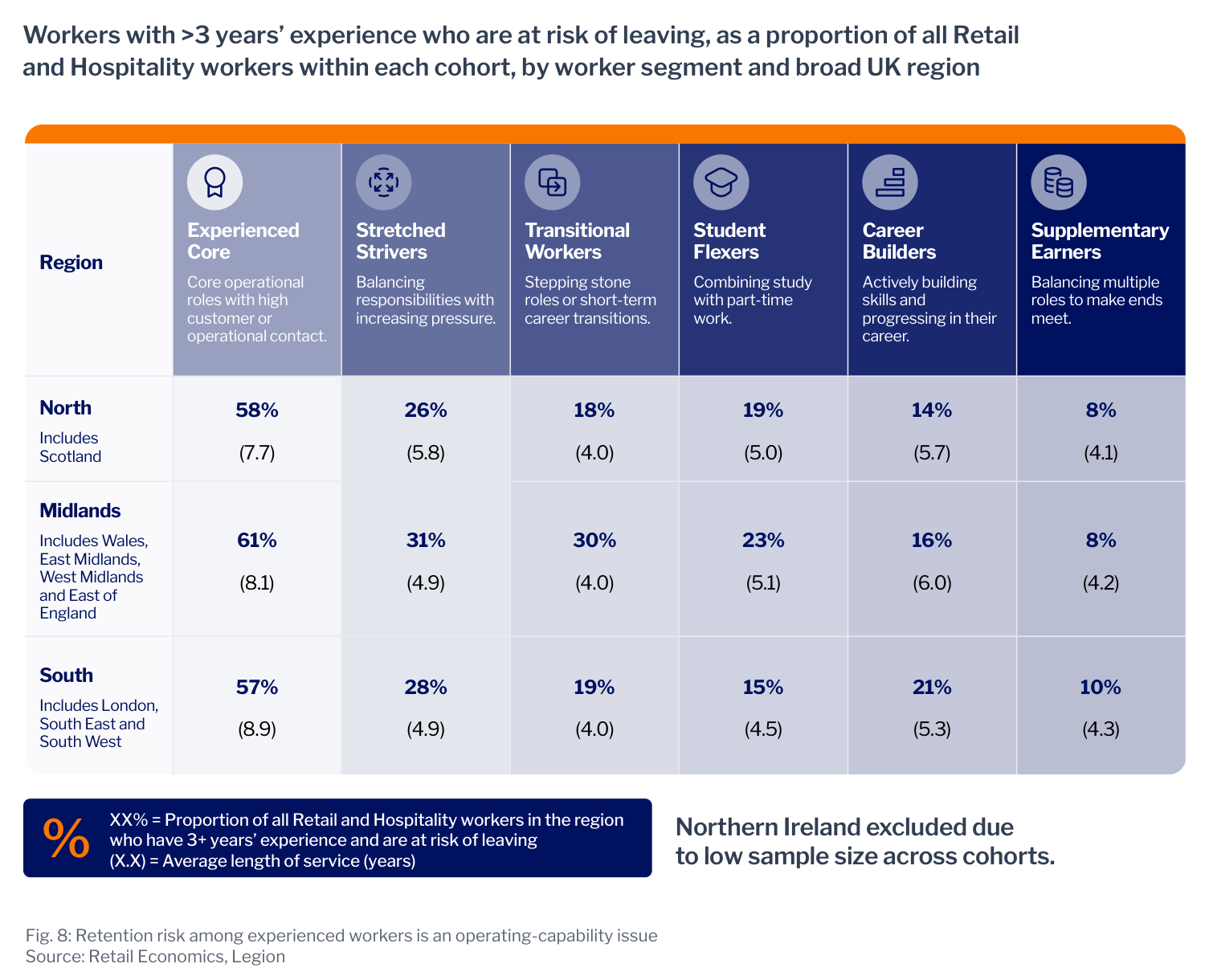
• More than half of Experienced Core workers are at risk across each broad region, at 57% in the South, 61% in the Midlands and 58% in the North.
• Where workers use a dedicated system or app and feel their availability is respected, 56% say shift changes are usually easy, compared with 12% where preferences are often overlooked.
Section 1: Where resilience is under strain
The report begins by benchmarking the frontline model and showing where resilience is strongest and weakest. Fig. 1 shows the overall score of 65/100 and reveals a clear process-versus-practice gap, with schedule stability and support lagging behind the stronger scores for fairness and flexibility.
Fig. 1: The Frontline Workforce Index: Pillar scores and underlying measures
The workforce segmentation sharpens that diagnosis. Fig. 3 shows that the largest cohorts do not all need the same thing. Student Flexers need flexibility and support, Stretched Strivers need more predictable hours and lower pressure, while Experienced Core need stronger support and reasons to stay committed.
Fig. 3: Workforce cohort needs differ greatly
Source: Retail Economics, Legion
Section 2: What the strain is costing
The commercial consequences are substantial. Fig. 5 shows that underemployment represents a much wider £3.6 billion earnings gap, with a near-term operational opportunity to rebalance £0.9 billion of hours from workers wanting fewer hours to those wanting more.
Fig. 5: £0.9 billion potential earnings from rebalancing workers’ hours from those wanting fewer vs. more hours
Capability risk is equally important. Fig. 8 highlights the exposure among experienced workers, especially the Experienced Core. Losing these workers means losing local knowledge, operating memory and team stability, not simply replacing headcount.
Fig. 8: Retention risk among experienced workers is an operating-capability issue
Source: Retail Economics, Legion
Section 3: From diagnosis to response
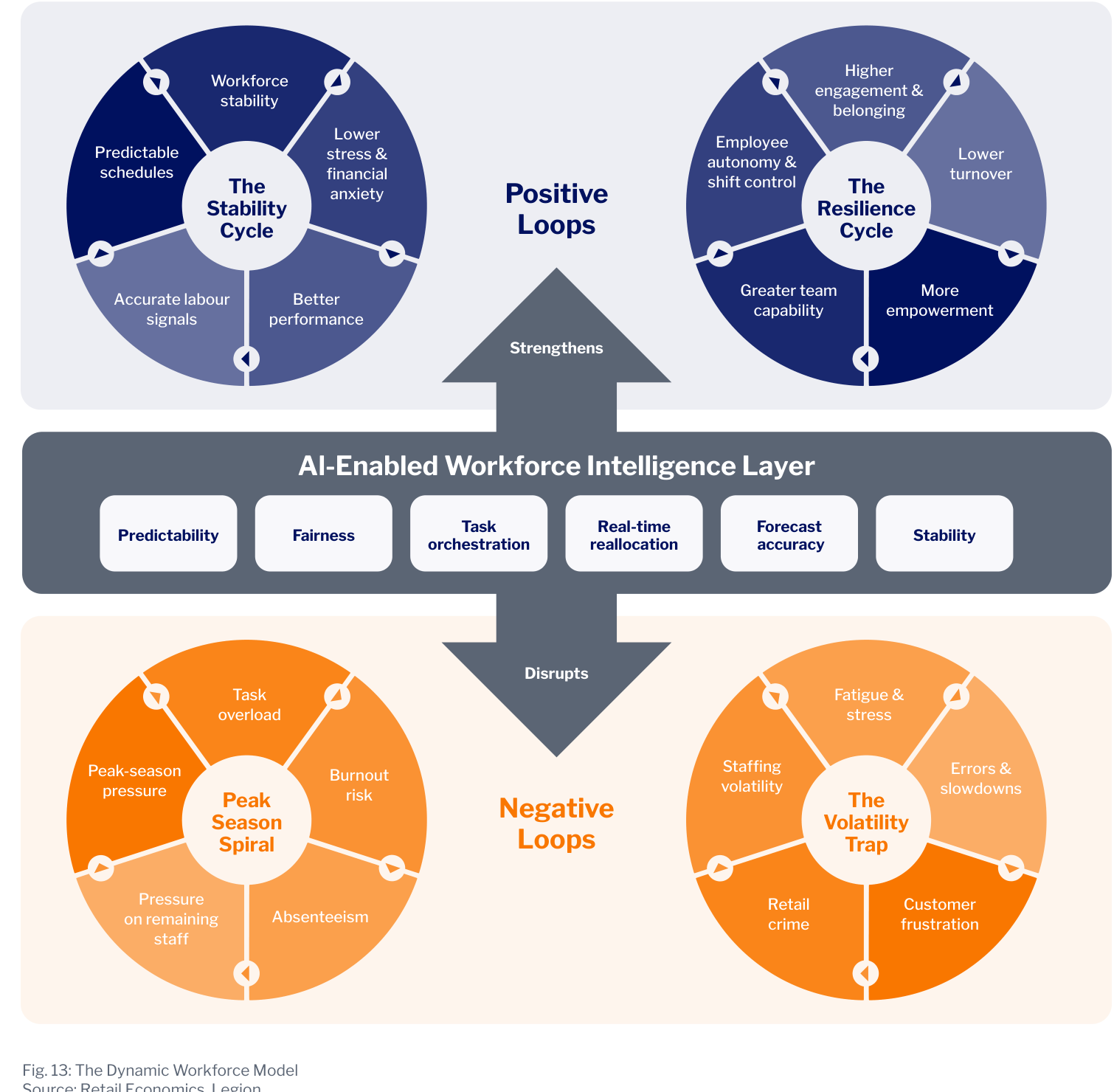
The report’s response framework is set out in Fig. 13. It shows how AI-enabled workforce intelligence can disrupt negative loops such as burnout, volatility and absenteeism, while strengthening the positive loops that support stability, lower stress, higher engagement and stronger team capability.
Fig. 13: The Dynamic Workforce Model
Taken together, the findings show that workforce resilience is becoming a measurable source of commercial advantage. Employers that improve rota quality, support, hour matching and trust in workforce systems will be better placed to protect capability, strengthen execution and improve performance.
About this report
The Frontline Workforce Index is based on a nationally representative sample of 2,000 UK retail and hospitality employees, including 1,500 in retail and 500 in hospitality, all in frontline customer-facing roles. Fieldwork was conducted in April 2026.