The Future of Search and Discovery: A Strategic Playbook to Understand Agentic Commerce
DOWNLOAD FREE REPORT
5 minute read
The visibility imperative: How retailers need to stay discoverable as AI agents reshape search
We surveyed 6,000 consumers across the UK, US and France to understand how AI-led discovery, trust and delegation are evolving
Retail search and discovery is entering a new phase. Instead of shoppers relying solely on keywords, AI assistants and emerging agentic systems are beginning to interpret intent, retrieve information across the web, and curate consideration sets before a retailer is ever visited.
This report sets out what that shift means in practice. It combines a review of technological change with new consumer evidence to help retail leaders remain discoverable, trusted and commercially viable as AI intermediaries gain influence over visibility.
What you can learn from this report
• Where AI assistants are already influencing discovery and evaluation, and where consumers still draw boundaries around trust and control.
• Why visibility is shifting towards machine-readability, data structure and governance, not just human-facing optimisation.
• How to treat AI traffic as a strategic choice, defining what to allow, limit or block to protect performance, trust and value.
• Which categories and shopping missions are most exposed to AI-led disruption, and why impact will not be uniform.
• The practical readiness workstreams and metrics retailers need to manage discovery performance beyond traditional SEO.
Key insights
• Agentic systems are becoming the new gatekeepers of retail visibility, reshaping discovery as AI agents interpret intent and curate options before a retailer’s site is even visited.
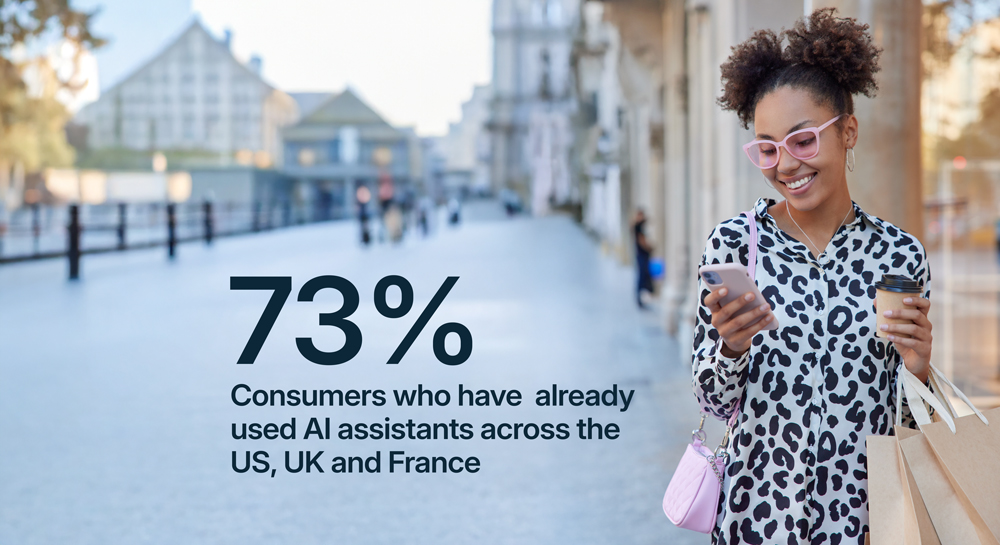
• 73% of consumers across the US, UK and France have already used AI assistants, signalling that AI-mediated discovery is now mainstream behaviour rather than a future trend.
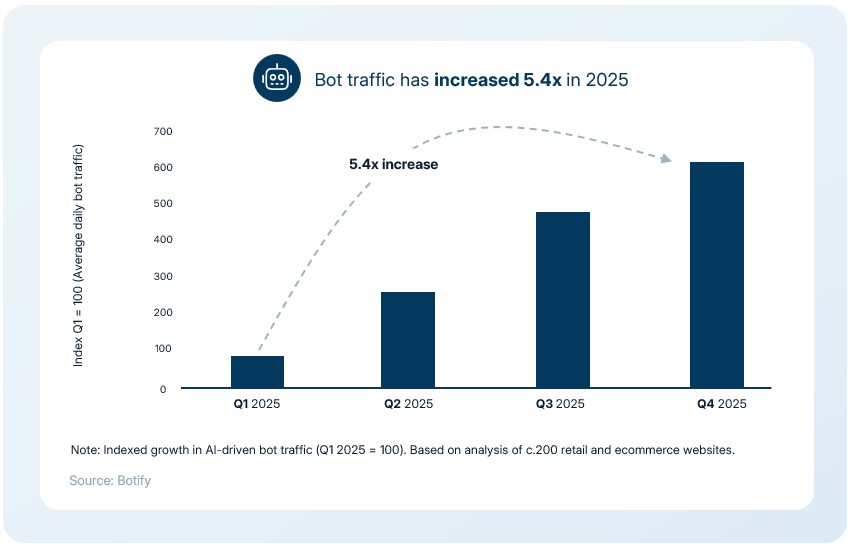
• 38% of consumers have used AI tools for shopping tasks such as product research, comparisons and recommendations, shifting early-stage discovery beyond traditional search engines.
• AI bot traffic has increased 5.4x in 2025, distorting traditional analytics, inflating impressions and making log-level visibility essential for accurate performance measurement.
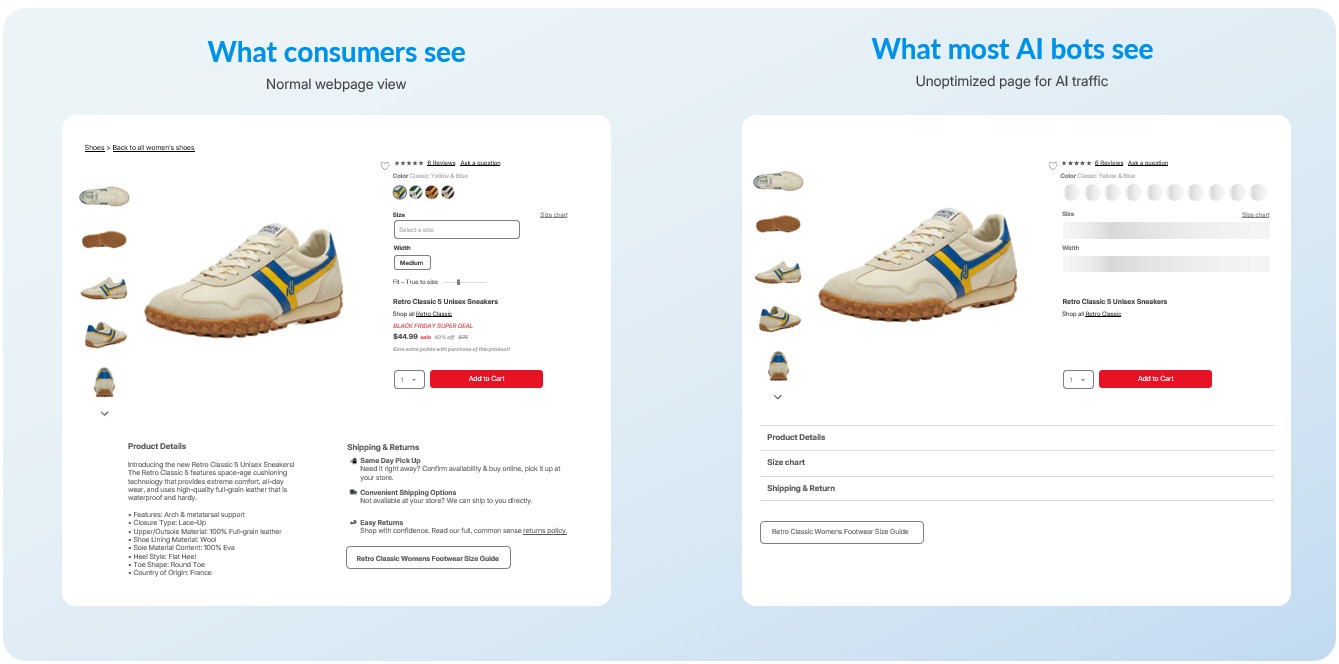
• JavaScript-rendered content remains largely invisible to many AI crawler bots, limiting discoverability and forcing AI systems to infer or bypass critical product data.
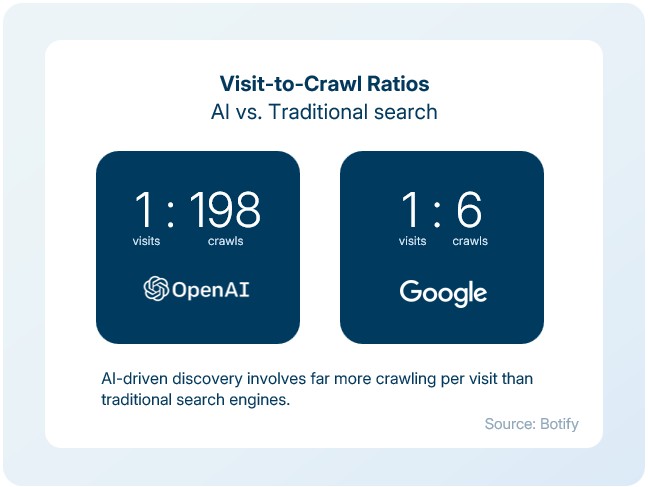
• Influence is shifting upstream, with Google serving one visit per six crawls versus one per 198 for OpenAI, highlighting how discovery and evaluation increasingly happen inside AI interfaces.
• Download the full report for more key insights...
Introduction
Retail search and discovery is entering a new phase.
Instead of shoppers typing keywords into search bars, AI assistants are beginning to take the strain. In this report, we describe this era as ‘agentic retail search and discovery’. This is a future where intelligent systems interpret consumer intent, scan content across the web, filter and rank options, and increasingly complete parts of the purchase process on the customer’s behalf.
To understand what this means, our research combines a review of technological change with new consumer evidence. We surveyed 6,000 nationally representative consumers across the UK, US and France, and mined key insights to help retail leaders navigate the transition to agentic search and discovery.
Our work covers:
• Where consumers are already using AI assistants in their shopping journeys, and where trust is still fragile.
• The forces reshaping visibility, from data quality and bot traffic to new agent-led discovery paths.
• Which missions, categories and shopper cohorts are most exposed to change – and how fast.
• The new performance metrics that matter in an AI-first landscape.
• Practical priorities and actions to align data, security, product and marketing teams around future-ready discovery.
Section 1: The changing foundations of discovery
The evolution of search and discovery
Product search and discovery has changed significantly over the past 15 years (Fig. 1). What began as keyword-driven search has shifted towards mobile browsing, personalised feeds, and now agentic discovery. Each phase has shortened the journey from intent to transaction.
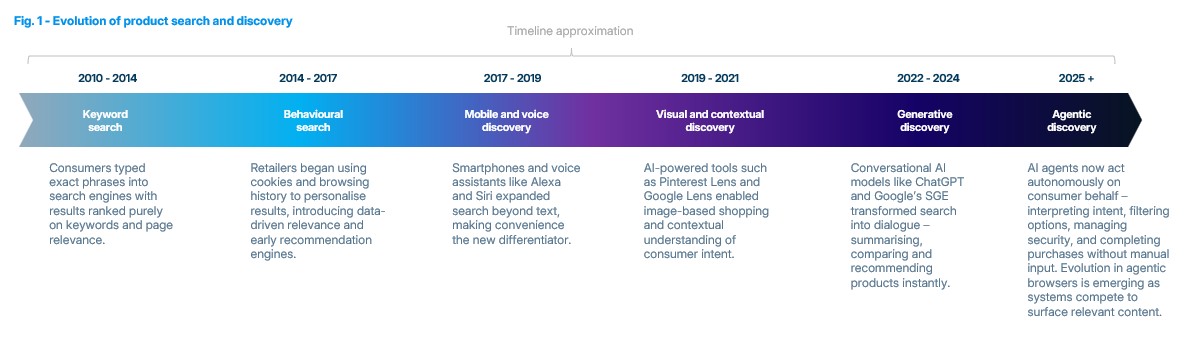
The shift now underway is significant
AI-driven discovery is reshaping where consumer journeys begin and how products are surfaced, researched and bought. More shoppers are turning to conversational tools, voice assistants and early agentic systems that interpret intent and narrow choices on their behalf.
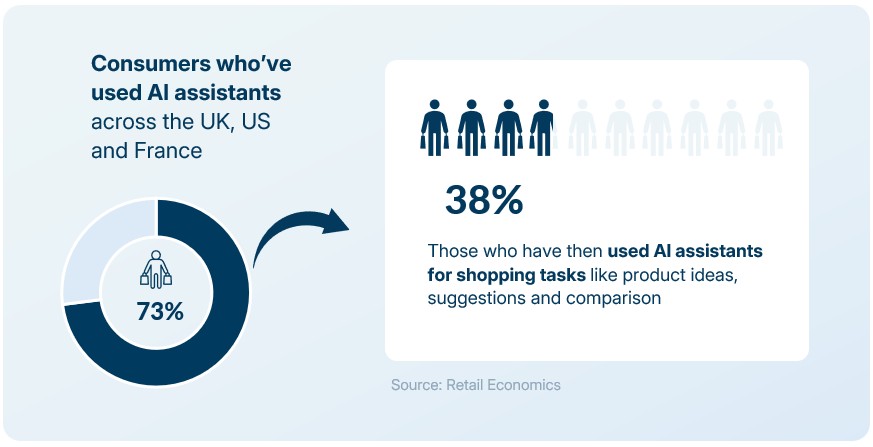
Rise of the AI bots
AI-driven bot activity is scaling rapidly as platforms scape retail websites for model training, live retrieval and agent-led discovery. Unlike human users, these systems generate high-volume, concurrent requests, accelerating traffic growth and changing the underlying mechanics of discovery in ways that are not always visible in traditional analytics.
AI is shifting where discovery and evaluation take place
AI platforms interact with retail websites in fundamentally different ways to traditional search engines. While search engines crawl primarily to index content and drive traffic, AI systems crawl more intensively to ingest, validate and compare information within their own interfaces.
As a result, a growing share of discovery and evaluation now happens upstream, before a shopper reaches a retailer’s site. This challenges traditional assumptions about how visibility translates into traffic.
Forces of disruption
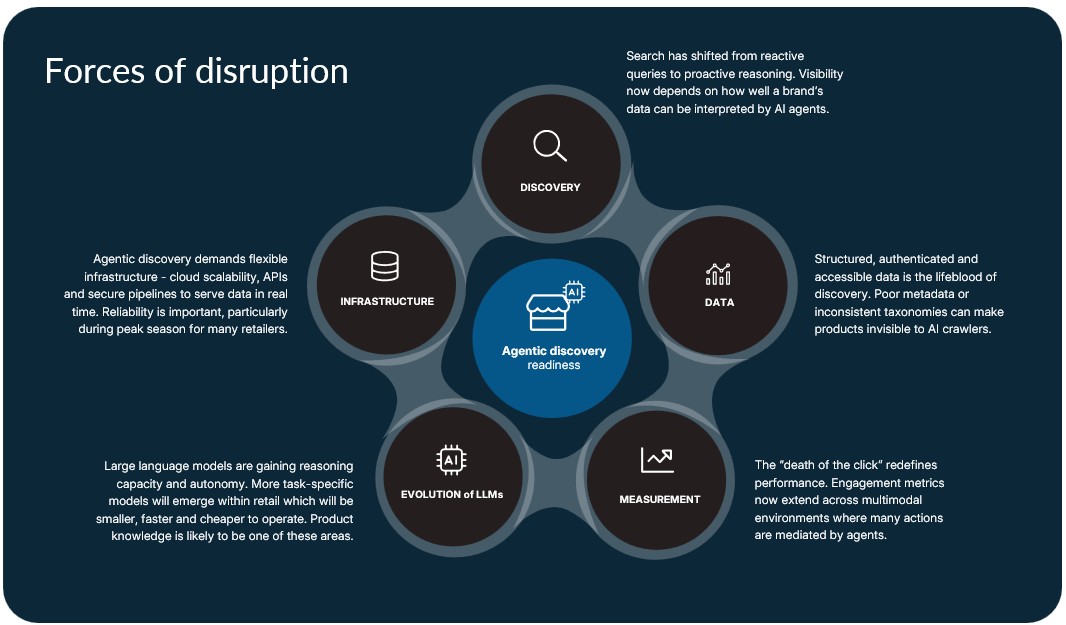
Our research identifies five main forces redefining how visibility is earned and how products are surfaced (Fig. 2). Together these forces reshape visibility, competition and consumer experiences.
Fig. 2 - The five forces of agentic search disruption
The ‘invisible’ brand: Most AI bots can’t see content in JavaScript
If a brand’s product data is not properly structured, accessible and machine-readable, AI bots and agents will only see a partial or distorted view of their offering. This significantly limits visibility in AI-led search and discovery as most AI bots can’t see content in JavaScript.
Why AI changes the rules of brand visibility
These systems go beyond just pointing shoppers to websites. They retrieve, interpret and prioritise information on the consumer’s behalf, often before a retailer is ever visited.
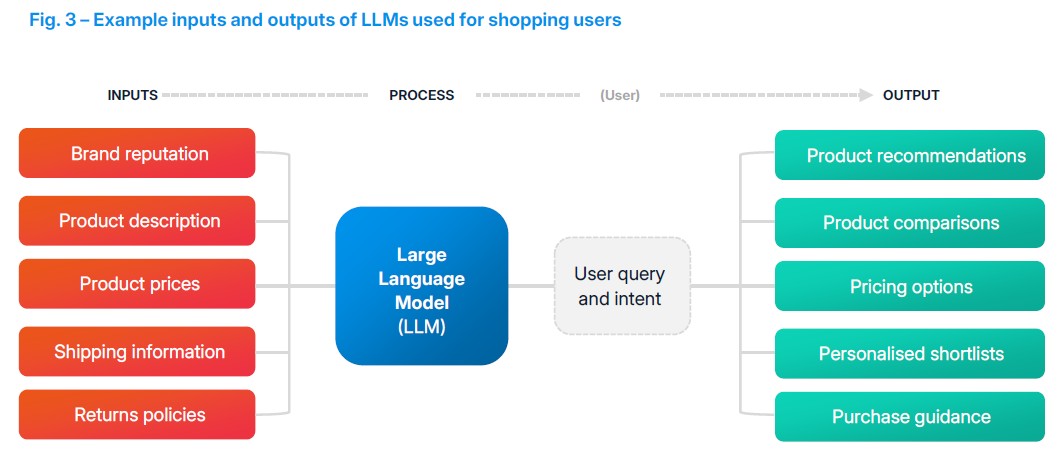
With search, an AI agent uses large language models (LLMs) to understand intent, gather online information, and generate outputs such as answers, comparisons or recommendations (Fig. 3). Unlike traditional search engines, which return lists of links, agents increasingly decide what is surfaced, shaping consideration sets directly.
These agents interact with the web in different ways. Some crawl and index content, while others retrieve fresh information in real time to respond to queries, or use web data to train and refine models. Together, they determine what information AI systems can see, understand and trust.
As agents become embedded in search engines, browsers and shopping assistants, visibility increasingly depends on machine-readability, access rules and data governance, not just human-facing optimisation.
Example inputs and outputs of LLMs used for shopping users
📥 Download the report now to understand how agentic search and discovery is going to impact consumer behaviour and the path to purchase.
Section 2: Inside the mind of the AI-assisted shopper
The new discovery mindset
Compared to other digital technologies, learning to use AI is relatively simple.
With AI increasingly integrated into search engines (e.g. Google AI Overview), many consumers are now encountering AI-assisted experiences by default rather than through deliberate adoption.
Our research shows that 73% of consumers across the UK, US and France have consciously used AI in some way over the past twelve months. With AI embedded directly into popular search engines, overall exposure is likely higher still, underlining how closely AI is now intertwined with traditional search.
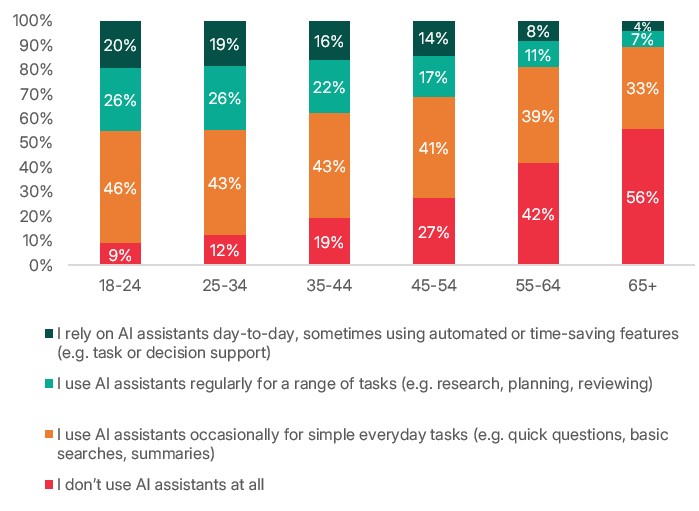
Four in ten consumers say they use AI assistants occasionally for quick, simple tasks, while 17% use them more regularly for activities such as research or planning. A further 13% say they rely on AI assistants on a daily basis, using them to support decision making or reduce effort across routine tasks.
Depth of use varies sharply by age (Fig. 8). For younger consumers, around one in four shoppers aged 18–34 use AI assistants regularly, and one in five rely on them day-to-day – around three times as likely as consumers aged 55 and over, where fewer than one in ten report day-to-day use.
Fig. 8 - Consumer use of AI assistants by age
Source: Retail Economics
AI assistants and shopping use
In practice, consumer use of AI reflects exposure to automated recommendations, defaults, re-order prompts or subscription-based experiences, rather than fully autonomous purchasing. However, AI adoption is already significant for different use cases (Fig. 9). These motivations indicate that consumers lean on AI when speed, clarity or cognitive relief matter most.
Amazon Rufus
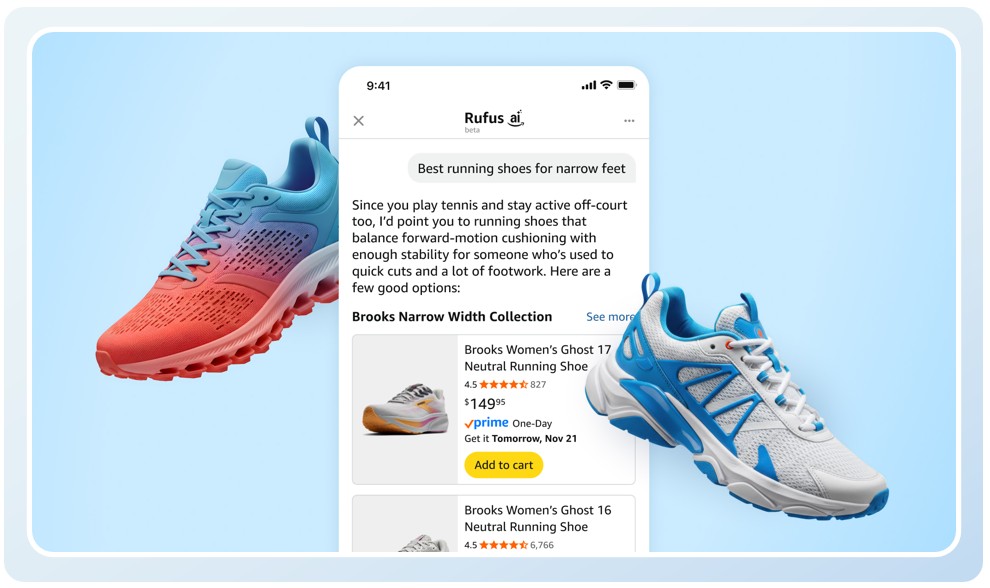
Customers who use Rufus while shopping are over 60% more likely to make a purchase during that session
How different influences and age impact AI use for shopping tasks
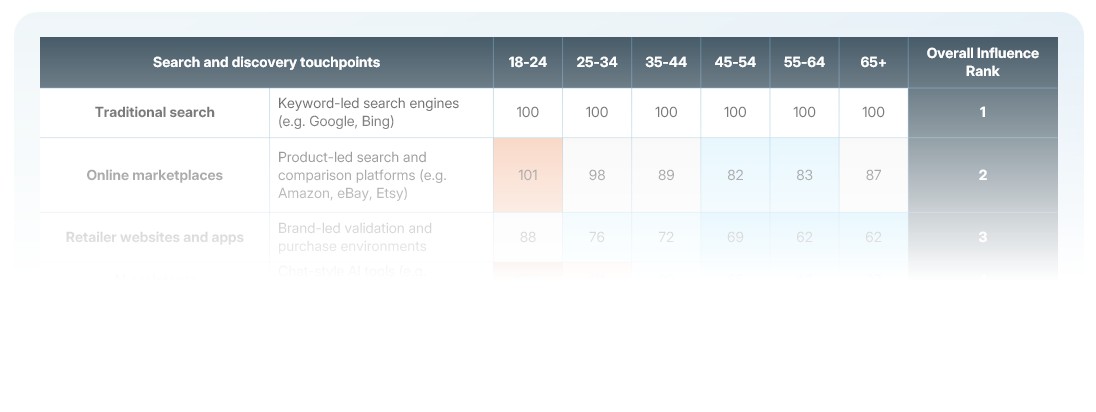
Traditional search engines remain the anchor across all age groups, but their relative importance weakens at younger ages as AI assistants and content-led platforms play a more influential role during discovery and research.
Among 18–24 year-olds, AI assistants and social discovery channels exert a level of influence that matches or exceeds traditional search, reflecting a shift towards more conversational, assisted and content-driven pathways into shopping journeys.
Fig. 10 - AI assistants and content platforms exert growing influence at the start of the shopping journey
Best practices and considerations
Our research outlines a selection of best practices and considerations within the three workstreams.
These can help retailers see how AI systems interact with their digital estate, govern access and behaviour to protect revenue and trust, and enable AI-ready experiences for their customers. In combination, they allow retailers to balance visibility, control and customer value, ensuring AI-led discovery drives sustainable growth rather than unmanaged risk.
The future of search and discovery: AI-ready strategy workstreams
Download your FREE report to explore more insights
• Regional differences in AI search
• How AI use compares with other search and discovery channels by region
• Which categories will agentic search impact fastest?
• How does shopper mission impact use of agentic search?
• The AI-discovery consumer personas
• AI search and discovery strategies and much more...
📥 Download the report now to understand how agentic search and discovery is going to impact consumer behaviour and the path to purchase.