Report Summary
Period covered 02 August – 29 August 2026
3 minute read
Note: This report summary is one or two months behind the current month as standard reporting practice. The content is indicative only and incomplete with certain data undisclosed. Become a member to access this data or take out a free 30 day membership trial now.
Food & Grocery Sales
Food and grocery sales increased by xx% year-on-year in August, easing from xx% in July and falling well short of the xx% growth recorded in August last year. The category has lost some pace since the xx% increase recorded in May, but growth remained slightly ahead of the xx% rise across retail.
With food and non-alcoholic beverage prices xx% higher than a year ago, inflation accounted for part of the increase in sales values.
Key trading themes and drivers
The exceptional summer weather stretched well into August, with temperatures reaching 38.1°C at Kew Gardens on 13 August during another heatwave. Food and grocery sales did not see a fresh lift, however, with growth slipping slightly from July.
Promotions were a prominent part of grocery spending during the month. Worldpanel reported that xx% of grocery spending was made on deals, the highest proportion recorded so far in 2026. With close to a third of spend going through promotions, offers were playing a significant part in grocery purchasing.
Growth also varied considerably between individual grocers. Worldpanel recorded increases of xx% for M&S grocery, xx% for Ocado and xx% for Lidl, compared with xx% for Sainsbury's and xx% for Tesco.
Online sales improved on the previous month in August, rising xx% YoY. Worldpanel reported that Ocado had been the fastest growing grocer for 30 consecutive reporting periods.
Shopping patterns changed with the weather during August, particularly during the heatwave in the middle of the month. High street footfall fell xx% WoW on 13 August as coastal towns attracted more visitors, before heavy rain later in the month saw shopping centre and retail park footfall increase.
Macroeconomic backdrop
Household finances came under greater pressure during August as CPI inflation rose to xx%, from xx% in July and xx% in June, bringing it close to regular wage growth of xx%. The margin by which pay was outpacing inflation had narrowed considerably, reducing the improvement in purchasing power seen earlier in the year.
A further increase in essential costs is approaching, with electricity, gas and other household fuels already xx more expensive than a year ago. The energy price cap will rise by xx from October, taking the typical annual dual-fuel bill to £xx just as colder weather begins to increase household energy use.
Conditions in the labour market also weakened, with payrolled employment estimated to have fallen by xx in August and xx over the year, while vacancies dropped to xx, their lowest level since 2021.
Regular wage growth remained positive at xx%, but the combination of softer employment and higher inflation made the household finances picture less comfortable than it had been earlier in the summer.
Improving consumer confidence provided some comfort, rising three points to xx in August, its highest level in two years, with expectations for personal finances also improving.
Take out a FREE 30 day membership trial to read the full report.
UK Grocery Market Share (12 weeks to 6 September 2026)
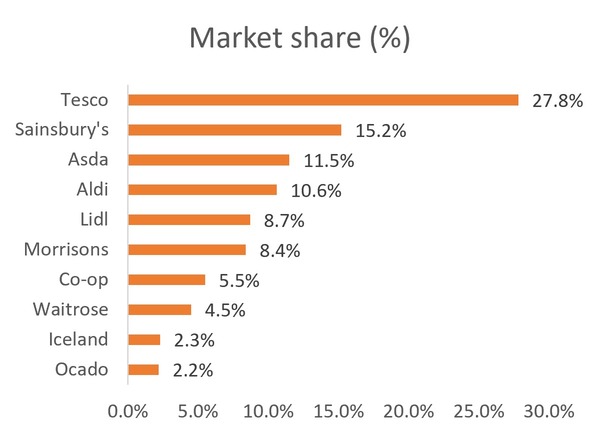 Source: Worldpanel, Retail Economics