UK Retail Inflation Report summary
August 2026
Period covered: Period covered: July 2026
3 minute read
Note: This report summary is one or two months behind the current month as standard reporting practice. The content is indicative only and incomplete with certain data undisclosed. Subscribe to access this data or take out a free 30-day subscription trial now.
Inflation
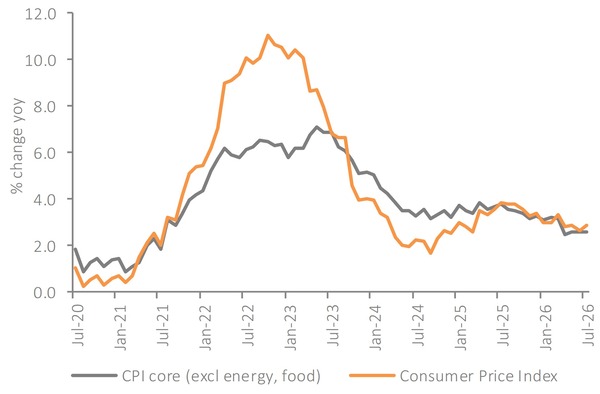
Headline inflation rises: CPI rose to xx% YoY in July, up from xx% in June. Prices increased by xx% on the month, compared with xx% a year earlier.
The rise was driven mainly by household energy bills following the July increase in the Ofgem price cap, with lower fuel inflation and softer food inflation limiting the increase in the headline rate.
Core inflation unchanged: Core CPI remained at xx% YoY for the third consecutive month, with goods inflation rising to xx% from xx% and services inflation easing to xx% from xx%.
Household energy bills lift inflation: Housing and household services inflation rose to xx% YoY, up from xx% in June. Gas prices rose by xx% on the month, compared with a fall a year ago, after the typical annual dual-fuel bill increased to £xx under the July price cap. This was the largest monthly rise in gas prices since October 2022, taking gas prices to their highest level since March 2024.
Food inflation falls further: Food and non-alcoholic drink inflation eased to xx% YoY, down from xx% in June, reaching its lowest rate since September 2021. Meat, vegetables and confectionery pulled the annual rate lower, with small upward effects from bread and cereals, and fish.
Fuel softens transport inflation: Transport inflation slowed to xx YoY from xx% in June, supported by easing fuel prices. Air fares also helped bring the transport rate down, with European routes falling on the month. Long-haul fares rose sharply, as Middle East disruption affected capacity, routing and fuel costs.
Clothing prices rise: Clothing and footwear inflation returned to growth, rising xx% YoY after a xx% fall in June. Prices still fell on the month, but the decline was smaller than usual for July. Warmer weather and earlier summer promotions meant fewer clothing items were discounted in July than a year earlier.
Manufacturer cost pressure eases again: Output price inflation slowed to xx% YoY in July from xx% in June, while input cost inflation fell toxx% from xx%. The gap between input and output inflation has narrowed, but costs are still rising faster than selling prices, keeping margins under pressure.
Rate expectations remain restrained: The increase in headline inflation was largely driven by household energy bills, while food inflation continued to ease and services inflation slowed. Markets expect rates to remain unchanged next month, with December seen as the first realistic point for a possible move.
Take out a free 30-day trial subscription to read the full report >
CPI rose to 2.9% YoY in July, up from 2.6% in June
 Source: ONS, Retail Economics analysis