UK Clothing & Footwear Sector Report summary
August 2026
Period covered: Period covered 05 July – 01 August 2026
3 minute read
Note: This report summary is one or two months behind the current month as standard reporting practice. The content is indicative only and incomplete with certain data undisclosed. Become a member to access this data or take out a free 30-day membership trial now.
Clothing & Footwear Sales
Clothing sales rose by xx% year-on-year in July, as footwear sales fell by xx%, extending the gap between the two.
Clothing growth slowed after a particularly strong May and June, when sales increased by xx% and xx% respectively, as consumers entered their third consecutive month of exceptional summer weather having already made many of their seasonal purchases.
Footwear had a more difficult month and moved into decline, with demand failing to share the resilience seen across clothing.
The difference between the two categories has become increasingly pronounced over the summer, with consumers continuing to find reasons to add clothing to their wardrobes without extending that spending across footwear to the same degree.
Key drivers
July was the UK's second warmest July on record and the sunniest ever recorded, extending a summer that had already provided fashion retailers with unusually favourable selling conditions.
Clothing remained relevant through holidays, outdoor events and continued demand for lightweight ranges, but the weather no longer provided the same uplift it had when temperatures first climbed.
The World Cup provided another reason to spend, particularly across sportswear, as England's progress to the semi-final kept football merchandise prominent through the first half of July.
JD Sports reported stronger apparel and accessories sales, including demand for replica football kits, at the same time as footwear remained difficult and promotional activity across the market remained high.
Retailer performance also showed that summer clothing continued to sell when ranges remained relevant.
Next recorded UK full-price sales growth of xx% during its second quarter and raised its full-year pre-tax profit guidance by £xx, with the exceptionally warm UK summer contributing to stronger-than-expected trading.
The result provides a useful indication of the continuing appetite for seasonal clothing after several months of favourable weather.
Fashion prices also began rising again, with clothing and footwear inflation reaching xx% year-on-year in July after falling xx% in June.
This brought an end to the brief period of price declines and came at a point when households had already spent heavily on summer ranges.
Fashion shopping moved back towards physical stores during July after online channels had enjoyed a particularly strong start to the summer.
Footfall also improved during the month, with visits to UK retail destinations rising xx% from June and coastal towns recording particularly strong growth as the school holidays began.
Online remained an important part of fashion shopping, particularly during the research and comparison stage, but July showed consumers moving between channels according to what they needed and how quickly they needed it.
Next's UK online full-price sales increasedxx% during its second quarter, illustrating that stronger store trading did not come at the expense of digital engagement across the market.
Outlook
Fashion has enjoyed an unusually long summer selling period, with three consecutive months of exceptional temperatures giving consumers ample opportunity to build their seasonal wardrobes.
That has been particularly beneficial to clothing, but it also means much of the obvious summer demand has already been satisfied by the time retailers enter August.
Holidays and late-summer occasions will continue to generate purchases, but another spell of hot weather cannot recreate the initial wardrobe refresh that accompanied the arrival of summer.
Footwear has received the same weather, sporting calendar and improvement in consumer confidence as clothing without producing comparable growth, and promotional pressure has remained high.
The timing of the autumn wardrobe change now becomes particularly important after such a prolonged summer. With high temperatures persisting into late August, demand for knitwear, coats, boots and other autumn ranges will arrive later, extending the period retailers need to manage summer stock before consumers have a reason to move on.
Take out a FREE 30 day membership trial to read the full report.
Consumer confidence improved
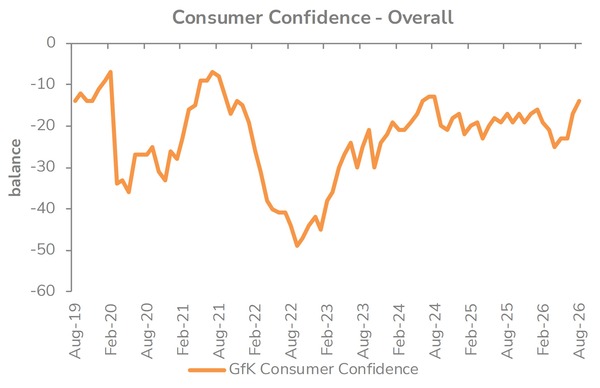 Source: Retail Economics analysis, GFK