Report Summary
Period covered 05 July – 01 August 2026
3 minute read
Note: This report summary is one or two months behind the current month as standard reporting practice. The content is indicative only and incomplete with certain data undisclosed. Become a member to access this data or take out a free 30-day membership trial now.
DIY & Gardening Sales
DIY and gardening sales increased by xx% year-on-year in July, ahead of the xx% rise recorded a year earlier and marking the third consecutive month of growth.
Sales have remained positive throughout the main summer trading period, although the pace slowed from xx% in May and xx% in June, leaving July some way below the stronger rates recorded at the start of the season.
The sector continued to benefit from households spending time at home and outdoors during another exceptionally warm month, but July also brought conditions that made parts of the market more difficult.
Prolonged heat, very low rainfall and water restrictions complicated gardening activity, while larger DIY projects remained constrained by household finances and weak housing activity.
Key trading themes and drivers
July extended an extraordinary run of summer weather, becoming the UK's second warmest July on record as well as the sunniest, after unusually high temperatures throughout May and June.
The weather kept gardens and outdoor spaces in regular use and sustained interest in seasonal home improvement, but three months of favourable conditions also meant consumers had already had considerable time to complete summer projects and make many of the purchases associated with them.
Repairs, maintenance and smaller improvements remained easier to accommodate within household budgets, whereas larger renovations required considerably greater financial commitment at a time when mortgage costs and household bills remained high.
Within gardening, the HTA reported an xx% year-on-year increase in garden centre sales during July, with transactions up xx% and average transaction values xx% higher.
Garden and gardening categories rose xx%, with particularly strong growth across tools and equipment, BBQs and heating, outdoor containers and garden furniture.
Macroeconomic backdrop
The financial environment remained difficult for larger home improvement expenditure during July as CPI inflation increased to xx% from xx% in June. Ofgem's higher energy price cap also took effect on 1 July, adding £xx a year to a typical dual-fuel bill.
Food inflation eased to xx%, providing some relief within weekly budgets, but the increase in energy costs meant households did not receive the full benefit of that improvement. This is particularly relevant to DIY because much of the sector is discretionary in timing. Essential repairs still require attention, whereas redecorating a room, replacing a kitchen or undertaking a larger renovation can be postponed when household finances become tighter.
Borrowing costs remained another restraint, with the Bank of England holding Bank Rate at xx% on 30 July. The effective rate on newly drawn mortgages had reached xx% in June, leaving homeowners taking out or refinancing mortgages with higher monthly commitments and less capacity to fund substantial improvement projects.
The housing market also remained subdued, limiting one of the sector's traditional sources of demand. Annual house price growth slowed to xx% in July, sales agreed were runningxx% below last year's level, and mortgage approvals remained around xx% below June 2025. Fewer property transactions mean fewer households entering the period of decorating, repair and renovation that often follows a move.
The labour market was less supportive, with unemployment at xx% in the three months to June and vacancies around a five-year low.
Consumer confidence provided some encouragement, rising six points to xx, with expectations for personal finances and attitudes towards major purchases improving.
Take out a FREE 30 day membership trial to read the full report.
Consumer confidence improved
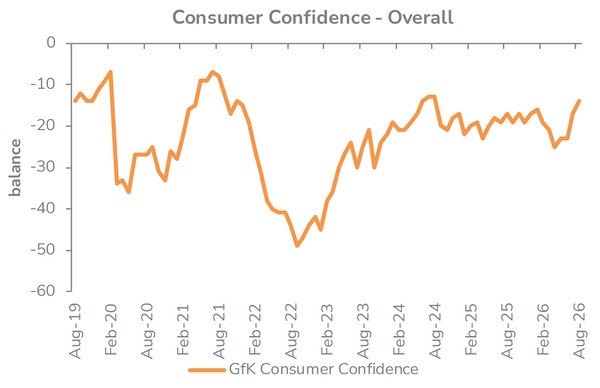 Source: Retail Economics analysis, GFK